


Negative changes and the destruction process that occurs in the cartilage tissue of the knee is called arthrosis of the knee joint.This disease is chronic and accompanied by painful symptoms.Often, knee arthrosis develops with age;at a young age, the post-traumatic form is usually found.This disease is also called gonarthrosis, and its popular name is "salt deposition."
Signs
Gonarthrosis is the destruction of cartilage tissue due to poor blood circulation in bone vessels.As a result, deformed arthrosis may develop, due to bone overgrowth.
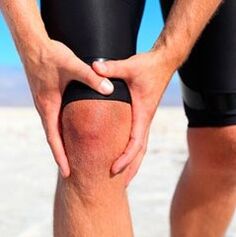
Usually the first symptoms of arthrosis are almost unnoticed.Mild pain does not cause specific discomfort and does not limit movement.It may take up to several years for deterioration to occur.Painful symptoms may be slightly worse after exercise or pressure on the leg.
As the disease progresses, new symptoms appear and old symptoms intensify.The pain just appears and does not go away for a long time even with rest.Long walks or lifting heavy objects result in prolonged knee pain.
After stage 2 arthrosis of the knee joint, the following symptoms appear:
- Synovitis - articular fluid accumulates in the joint.Excess can trigger the development of solid formation on the posterior wall of the joint cavity.This phenomenon is called Baker's cyst and can be cured without surgery.
- Knee defect.At first it swells a little, with grades 2 and 3 the shape of the knee may change.
- Crunch.Appears in the 2nd and 3rd stages of the disease.With sharp spasms, painful symptoms are clearly felt.
- Limited mobility.This is typical for arthrosis of the 2nd and 3rd degree, when the leg can only be bent at the right angle.As the form progresses, the knee can become completely immobile, and the joints in it are severely deformed.
- Meteosensitivity.Sickness during periods of change in weather conditions.
Symptoms and their intensity can vary significantly depending on the stage of development of the disease:
- In grade 1, pain appears after active physical activity.Early arthrosis damages cartilage tissue, but does not change the shape of the joint.Diagnosis of the disease is difficult.
- In the second stage, the joint space narrows, damaged cartilage tissue is clearly visible on x-ray.Movement involving the knee causes acute pain;a pulsating sound appears when flexing and extending.Joints work worse and worse, their deformation can be seen with the naked eye.
- In grade 3, areas of exposed bone "see through" thinned cartilage tissue.Salt deposits in the joint cavity.The pain persists even when resting.
Types of diseases
There are several types of knee osteoarthritis.By origin:
- main.This type of arthrosis of the knee joint does not depend on other diseases.At risk are the elderly, women and people who are overweight.
- Secondary.This disease appears after an injury or infectious disease.It can be avoided if the injury or inflammation of the knee joint is treated promptly.
By location:
- Two-faced.Both knees are affected.This disease is related to age, develops faster and seriously threatens disability.Bilateral arthrosis is often primary.
- right handThis disease attacks the right knee, most often found in athletes and people who often experience pressure on the right leg.
- left-handedLeft knee suffers;This disease is common among athletes and elderly people who are overweight.
Deformation of knee arthrosis is a disease that is more common in obese women.It is caused by strong salt deposition.In the early stages of deformation, the inside of the joint is affected;in the final stage, the exterior is also affected.Deforming gonarthrosis needs to be treated as early as possible so that the cartilage tissue in the above area remains in a normal state.The main symptoms are acute pain and crackling.
Patellofemoral syndrome
Often, knee arthrosis is preceded by patellofemoral syndrome.In medical literature and practice it is often called arthrosis with the same name.This is a lesion of cartilage tissue located in the patella.Patellofemoral syndrome is accompanied by the following symptoms:
- Pain in the joints, aggravated by prolonged bending of the legs, jumping, running, walking up stairs or squatting.
- Limited knee mobility.
- Pounding and "clicking" in the joints.
- Stiffness in the joints.
Patellofemoral syndrome usually occurs in people whose activities or lifestyles involve heavy loads on the knees - athletes, obese people.This type of arthrosis also affects older people.Often, patellofemoral arthrosis occurs as a result of a severe knee injury.
When diagnosing the syndrome, it is important to immediately give rest to the affected leg.Sometimes, your doctor may recommend a tight brace or bandage to relieve pressure on your knee.People who are overweight need to lose excess weight little by little.You can use a cooling compress at home to relieve pain.
Patellofemoral syndrome develops progressively:
- In grade 1, pain appears only after doing very heavy exercise, and you often feel tired in the knees.
- With the 2nd - pain and discomfort are recorded more often, the joints become stiff.Symptoms disappear after rest.
- With the 3rd - constant pain, significant limitation of movement.
Patellofemoral syndrome needs to be treated holistically, and not just for pain relief.Treatment should include medications, administration of chondroprotectors, and physical procedures.Diet and physical therapy will not be superfluous.
Osteoarthritis after trauma
Post-traumatic arthrosis is a type of disease that most often occurs at a young age.After a knee injury, the limb does not move and blood circulation in it deteriorates.This has a negative effect on cartilage tissue and causes the development of arthrosis.Sometimes post-traumatic arthrosis can develop after joint surgery.Scar tissue can cut off the blood supply to the knee.
The post-traumatic form of this disease is chronic, so treatment is aimed at preventing arthrosis from developing further.It is almost impossible to cure post-traumatic arthrosis on your own at home.It will be necessary to take analgesics, chondroprotectors and antispasmodics, physical therapy, massage and hardware procedures.In advanced cases, surgery may be required.
Hemarthrosis
Hemarthrosis is a separate type of knee arthrosis that appears as a result of injury or as a result of blood clotting problems.Hemarthrosis can be caused by the following factors:
- bruised or broken knee joint and patella;
- traumatic damage to meniscus tissue and cartilage;
- ligament or synovium rupture;
- femur or tibia fracture;
- hemophilia;
- tumors of various origins;
- some neurological and infectious diseases;
- long-term use of anticoagulants;
- osteoarthritis;
- surgical intervention;
- problems with blood vessels.
- knees swollen or much deformed;
- when you press under your finger, you feel a flow of liquid;
- increased temperature in the injured area;
- soft tissue tense and blue.
Hemarthrosis can be accurately diagnosed only after joint puncture.In addition to analyzing joint fluid, CT and MRI can be performed.
To avoid complications, hemarthrosis must be treated immediately.For minor injuries, treatment can begin at home.Simple first aid methods will help minimize the consequences of bleeding in the joints:
- giving rest to the injured knee;
- lift your legs and straighten them;
- use a cold compress;
- take painkillers.
This sequence of actions, even at home, will relieve pain symptoms and help treat mild hemarthrosis;in more complex cases, you need to seek medical help.
People's recovery
Treatment of gonarthrosis with folk remedies should be agreed with the doctor.It is recommended to combine folk remedies with official medical methods.At home, using folk remedies, you can effectively treat mild hemarthrosis or reduce the patient's condition with complications.It is recommended to make compresses with horseradish:
- Peel and grate a small piece of horseradish.
- For very sensitive skin, rhizomes are replaced with plant leaves.
- Keep the mixture in a water bath for a few minutes.
- Put the root on a gauze and make a compress.
- The duration of the procedure is two hours.
At home, for traumatic hemarthrosis, ointment should not be used in the first two days after the injury.
In case of severe injury and heavy or prolonged bleeding in the joint, you should definitely consult a traumatologist.Traditional treatment methods in this situation are of secondary importance.Hemarthrosis needs to be treated with blood drainage in the hospital, but at home you can use products with anti-inflammatory and hemostatic effects.Infusions based on the following herbs will be useful:
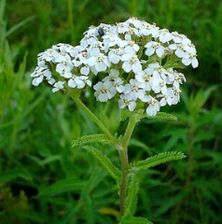
- yarrow;
- oregano;
- nettle.
They do it like this:
- Grind plant material.
- Mix the herbs in equal parts.
- Pour three tablespoons of the mixture into 600 ml of boiling water.
- Leave for 1 - 1.5 hours.
A warm and strained infusion should be taken three times a day, 50 ml.
Gelatin
At home, you can try to treat arthrosis deformans with gelatin.It contains a large amount of collagen, which improves the condition of cartilage tissue and increases the production of inter-articular lubrication.Treatment with gelatin should be combined with taking a vitamin complex rich in iron and vitamin C.
The medicinal mixture with gelatin is prepared according to the following recipe:
- Pour a teaspoon of gelatin into 50 ml of cold water.
- Leave the mixture for 12 hours.
- Add 150 ml of boiling water.
- After stirring, add a teaspoon of honey.
A glass of this drink with gelatin is drunk on an empty stomach for 10 days.Then you need a week off.The course is repeated two more times.
Ointments and rubs
To prepare an effective ointment at home, you need the following components:
- turpentine - 150 ml;
- vodka - 150 ml;
- olive oil - 150 ml;
- camphor - 3 grams.
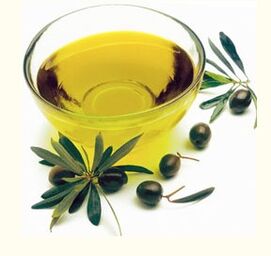
All components of the ointment must be mixed and applied to the affected area twice a day.
At home, arthrosis deformans can be treated with radish-based ointment.The following materials will be needed:
- black radish;
- linden honey - 150 grams;
- vodka - 100 ml;
- sea salt - 15 grams.
Ointment recipe:
- Peel and chop the carrots.
- Pass root vegetables through a meat grinder or grind in a blender.
- Squeeze the juice from the radish.
- Add the remaining ingredients and mix the mixture.
Rub the sore knees with this mixture.
Lard can be used as an ointment..Every evening you need to rub this product into your joints and protect them overnight.Arthrosis should be treated in this way for at least six months.
When you need to quickly relieve pain and restore the mobility of your legs, warming ointments are very useful.It is important to understand that these drugs cannot cure the disease, but only temporarily relieve the symptoms.Contraindications to the use of heating drugs are post-traumatic arthrosis and damaged skin.
A warming remedy with an anti-inflammatory effect can be made at home.Therapeutic ointment is prepared from the following components:
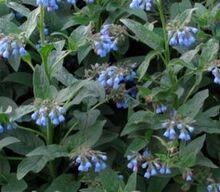
- comfrey leaves - 1 cup;
- comfrey root - 2 cups;
- olive oil - 0.5 cups;
- honey - 0.5 cups.
Method of preparation and use:
- Grind and mix the plant material.
- Dilute the honey, if necessary.
- Mix all the ingredients, it is better to do this with a mixer.
- Before use, the required portion of the product must be heated.
- Ointment can be stored for 2 weeks in the refrigerator or 3 months in the refrigerator.
- Apply the medicine to the joints, insulation and leave for 8 - 12 hours.
Hyaluronic acid
Primary arthrosis is very effectively treated with hyaluronic acid.This substance is the basis of synovial fluid.Intra-articular injections with hyaluronic acid can cure or stop the progression of any type of knee arthrosis.This procedure is prohibited at home!Injections with hyaluronic acid can only be given by an experienced doctor under special conditions.
For his part, patients can eat foods rich in hyaluronic acid to increase the therapeutic effect.For joint health, it is recommended to include the following dishes in your diet:
- chicken soup or jellied meat prepared using combs, claws, tendons and skin;
- soybeans;
- tofu;
- soy milk;
- red grape skins;
- red wine;
- starchy roots and vegetables.
To activate the production of hyaluronic acid by your own body, it must receive sufficient calcium, rutin and vitamin C.